AAC Made Simple
Many teams have AAC available but aren't sure how to use it. This session gives educators, SLPs, and paraprofessionals five simple activities to start modeling AAC right away: animal sound play, cause-and-effect play, academic tasks, shared reading, and transitions. Video examples show modeling without expectation on core boards and speech-generating devices, plus how to honor a child's protest.
Speaker
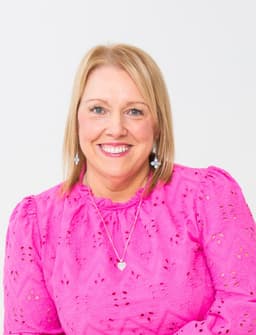
Tara Phillips is a speech-language pathologist and the founder of Autism Little Learners. She spent nearly 25 years running her own elementary, and then early childhood special education classroom. In 2019, she began creating the AAC, visual support, and play-based resources she could not find at the right level for her students. What started as a few downloads shared with other teachers grew into Autism Little Learners, which now supports educators, SLPs, OTs, paraprofessionals, and families through a membership community, the annual Preschool Autism Summit, and the Autism Little Learners podcast. Her work is grounded in neuro-affirming practice, presuming competence, and "communication is a basic human right", with a focus on strategies teams can implement right away.
Disclosure: Tara Phillips is the founder and owner of Autism Little Learners, which sells the resources, courses, and membership referenced in this presentation. She receives a speaking fee from ableU for this presentation. She has no other relevant financial relationships to disclose.
Built for you
Who this course is for
Every minute is written for working clinicians, educators, and families. You walk away with real-world tools to try with your next learner, not abstract theory.
Speech-Language Pathologists
Educators
AAC Teams
Communication Partners
After this course
What you’ll walk away with.
You leave with concrete skills and frameworks you can apply in your next session, classroom, or family visit, not just ideas to think about later.
Earn your CEUs
Attend the full course and pass the post-session assessment at 80% or higher. Your 0.05 ASHA CEUs are reported to ASHA when you opt in on the assessment.
- 01
You’ll be able to
Describe three foundational principles of early AAC use: that AAC has no prerequisites, that language is modeled without expectation of a response, and that competence is presumed.
- 02
You’ll be able to
Identify core and fringe vocabulary to model within five common early childhood activities: animal play, cause-and-effect play, academic tasks, shared reading, and transitions.
- 03
You’ll be able to
Demonstrate a response to a child's protest that acknowledges the child's message, models rejection language on AAC, and offers a real choice.
The full 30 minutes
Your learning path.
- 1
Introduction: presenter background and who this session is for
2 minutes - 2
Everyday challenges in early childhood settings and the supports that help (visual supports, presuming competence, deep interests, play), and where AAC fits in the day for each team member
3 minutes - 3
AAC overview: what counts as AAC, and why current research shows there are no prerequisites for access
4 minutes - 4
Modeling without expectation: what it is and what it is not, moving out of testing and prompting mode, accepting all modes of communication, and why whole-team modeling across the whole day creates more opportunities
6 minutes - 5
Activity 1: Animal sounds using a core board plus an animal fringe board
5 minutes - 6
Play-based modeling with motivating toys , go, stop, more, open, up , on a core board and a speech-generating device, plus low-cost and free app options
5 minutes - 7
Activity 3: Embedding AAC into academic tasks already in use , counting, sorting, colors, positional words , and presuming competence
5 minutes - 8
Activity 4: Acknowledging and honoring protest , modeling no, stop, all done, not yet; offering real choices; using transition objects
5 minutes - 9
Activity 5: Shared reading with adapted books , modeling core words, pausing on repetitive lines, talking about the pictures
4 minutes - 10
Summary and next steps for implementation
1 minute
Earn ASHA CEUs in three steps
Free courses, ASHA CEUs when you opt in.
Register & attend
Register in under a minute and watch on-demand, whenever it fits your schedule.
Pass the assessment
Complete the short post-course assessment with 80% or higher to confirm mastery.
CEUs reported to ASHA
Choose to be reported on the assessment and your 0.05 ASHA CEUs are filed to ASHA for you. No paperwork, no chasing certificates.
Ready when you are
Save your seat. It’s free.
Registration is short and free: no credit card, no trial, nothing to cancel later.
Keep going
More in AAC Implementation
ableU Live & Local-Philadelphia: AAC in Action
Join us for an in-person educational event on integrating augmentative and alternative communication (AAC) into daily life, with complimentary food and refreshments provided. A panel of speech-language pathologists and a parent of a device user will discuss device implementation, parent training for carryover, and interdisciplinary collaboration across service settings.
ableU Live & Local-Nashville: AAC in Action
Join us for an in-person educational event on integrating augmentative and alternative communication (AAC) into daily life, with complimentary food and refreshments provided. A panel of speech-language pathologists and a parent of a device user will discuss device implementation, parent training for carryover, and interdisciplinary collaboration across service settings.
Neurodiversity-Affirming Practices and AAC
This seminar explores neurodiversity-affirming AAC practices that promote communication, autonomy, and inclusion. Topics include multimodal communication, AAC access, communication opportunities, core vocabulary, modeling, respectful prompting, and sensory regulation, with practical strategies for supporting meaningful and independent communication.