When AAC Use Looks Different: Navigating Device Refusal, Stimming, and Emerging Communication
What do you do when a child refuses their AAC device? When they stim, script, or communicate in ways that aren't easily captured in data? For many professionals, these moments can feel confusing, frustrating, or like barriers to progress. But what if these behaviors are actually part of the communication journey? This presentation invites participants to reframe device refusal, stimming, and unconventional communication not as problems to fix, but as cues to listen more deeply. Drawing from autistic perspectives and current research, we will explore how to support emerging AAC users in ways that honor autonomy, build trust, and promote meaningful communication. We'll also share goal-writing strategies that move away from compliance-based models and toward affirming, functional supports that reflect real-life communication.
Speaker
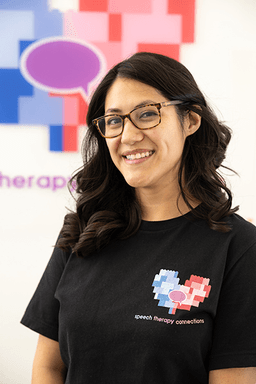
Amy is a certified speech-language pathologist with a diverse clinical background spanning acute care, SNFs, school, EI, and private practice. She has also served as an adjunct professor, supervising graduate students during their diagnostic practicum. Amy is the owner of Speech Therapy Connections, a private practice in Fair Lawn NJ, where she specializes in supporting autistic children, AAC users, and gestalt language processors using neurodiversity-affirming, strengths-based approaches. Amy is also the co-host of The Chill, SLP podcast alongside Dr. Angelyn Franks, where they unpack the roots of burnout and share grounded, actionable strategies to help SLPs create more sustainable, aligned lives. Amy is passionate about helping families and clinicians move beyond compliance-based models through her clinical work, digital resources, and professional development. Her approach reflects a deep respect for nuance, honoring the complexities of communication, connection, and autonomy.
Disclosure: Amy is the owner of a private practice, Speech Therapy Connections, where she receives a salary. Amy also sells digital products through Teachers Pay Teachers.
Built for you
Who this course is for
Every minute is written for working clinicians, educators, and families. You walk away with real-world tools to try with your next learner, not abstract theory.
Speech-Language Pathologists
Behavior Specialists
Educators
Parents & Caregivers
After this course
What you’ll walk away with.
You leave with concrete skills and frameworks you can apply in your next session, classroom, or family visit, not just ideas to think about later.
Earn your CEUs
Attend the full course and pass the post-session assessment at 80% or higher. Your 0.1 ASHA CEUs are reported to ASHA when you opt in on the assessment.
- 01
You’ll be able to
Describe three neurodiversity affirming strategies to interpret AAC device refusal, stimming, and communication differences in emerging communicators.
- 02
You’ll be able to
Identify two practical strategies to support AAC users in moments of dysregulation, device refusal, or non-traditional communication, while honoring autonomy and connection.
- 03
You’ll be able to
Describe at least one example of a meaningful, strengths-based goal for AAC users.
The full 1 hour
Your learning path.
- 1
Welcome + Rethinking Progress
5 minutes - 2
Understanding the purpose behind "unconventional" behaviors
10 minutes - 3
When behavior is communication
10 minutes - 4
Neurodiversity affirming strategies that support real communication
15 minutes - 5
Goal Writing
15 minutes - 6
Conclusion / Wrap up
5 minutes
Earn ASHA CEUs in three steps
Free courses, ASHA CEUs when you opt in.
Register & attend
Register in under a minute and watch on-demand, whenever it fits your schedule.
Pass the assessment
Complete the short post-course assessment with 80% or higher to confirm mastery.
CEUs reported to ASHA
Choose to be reported on the assessment and your 0.1 ASHA CEUs are filed to ASHA for you. No paperwork, no chasing certificates.
Ready when you are
Save your seat. It’s free.
Registration is short and free: no credit card, no trial, nothing to cancel later.
Keep going
More in Autism
Co-Regulation Strategies to Support Communication in Autistic Children
Speech-language therapy is most effective and meaningful when autistic children feel safe, connected, and regulated. Beyond assessment results, therapy activities, and data, we are humans helping humans. This presentation explores co-regulation through a neurodiversity-affirming lens and provides practical strategies to support autistic children in speech therapy.
Children with Autism Spectrum Disorder: Understanding & Responding
Children with autism spectrum disorder tend to process and respond to information in the environment in unique and unusual ways which frequently present challenges to educators and families. This session will illustrate how to better understand the characteristics of children with ASD and the underlying factors that contribute to their problem behaviors in order to provide individualized supports and interventions to maximize their academic, social, and behavioral outcomes. This session is part one of a three part series.
Setting and Student-Specific Personalized Interventions and Supports for Children with ASD
This session, combining the portrayal of several student case examples and setting-specific situations, will present proactive intervention techniques and tools to reduce challenging behaviors of students with ASD (Autism Spectrum Disorder). Empowered with best-practice techniques grounded in the positive behavioral interventions and supports (PBIS) approach, you can transform your knowledge into constructive action to achieve desirable long-term outcomes for children with ASD. This session is part two of a three part series.