Stutter-Affirming Therapy: What the Heck Do SLPs Do Now?
Stutter-affirming therapy sounds great in theory, but what the heck do we actually DO in therapy? If fluency isn't the goal, what is? Let's move beyond philosophy to practical clinical application. Through real-world examples, we'll explore what to prioritize, what to teach, and how to recognize meaningful progress. Come ready to rethink your role, and leave knowing what to do on Monday morning!
Speaker
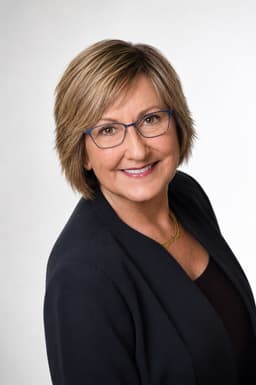
Nina Reeves, MS, CCC-SLP, BCS-SCF, is co-owner of Stuttering Therapy Resources and is an author of practical clinical materials. With extensive experience as a school-based SLP and private practitioner, Nina is recognized for practical, stutter-affirming continuing education presentations. For her career-long work in public schools Nina has earned the ASH-F Van Hattum Award, ASHA Excellence Award, and is an ASHA Fellow.
Disclosure: Speaker stipend - AbleNet Royalties, ownership interest, salary, intellectual property - Stuttering Therapy Resources
Built for you
Who this course is for
Every minute is written for working clinicians, educators, and families. You walk away with real-world tools to try with your next learner, not abstract theory.
Speech-Language Pathologists
Fluency Specialists
Educators
Graduate Students
After this course
What you’ll walk away with.
You leave with concrete skills and frameworks you can apply in your next session, classroom, or family visit, not just ideas to think about later.
Earn your CEUs
Attend the full course and pass the post-session assessment at 80% or higher. Your 0.1 ASHA CEUs are reported to ASHA when you opt in on the assessment.
- 01
You’ll be able to
Identify three key shifts in clinical thinking that distinguish stutter-affirming therapy from traditional fluency-focused approaches.
- 02
You’ll be able to
Describe at least three practical therapy activities that support authentic communication, reduce the adverse impact of stuttering, and promote individual autonomy.
- 03
You’ll be able to
Explain how stutter-affirming principles guide clinical decision-making, including the selection of therapy priorities and the evaluation of meaningful progress.
Time-ordered agenda
Live and recording schedule.
| Start – End (CT) | Session | Min |
|---|---|---|
| 12:00 PM – 12:05 PM | The question we're all asking | 5 |
| 12:05 PM – 12:15 PM | Three essential clinical shifts | 10 |
| 12:15 PM – 12:40 PM | What do we actually DO? | 25 |
| 12:40 PM – 12:50 PM | The questions that won't go away | 10 |
| 12:50 PM – 1:00 PM | Bringing it together- Key takeaways and resources for further learning & support | 10 |
| Total | 60 min |
| Start – End (runtime) | Session | Min |
|---|---|---|
| 0:00:00 – 0:05:00 | The question we're all asking | 5 |
| 0:05:00 – 0:15:00 | Three essential clinical shifts | 10 |
| 0:15:00 – 0:40:00 | What do we actually DO? | 25 |
| 0:40:00 – 0:50:00 | The questions that won't go away | 10 |
| 0:50:00 – 1:00:00 | Bringing it together- Key takeaways and resources for further learning & support | 10 |
| Total | 60 min |
Recording start and end times are projected from the live session and will be updated on this page once the recording is reviewed. Each session lists its start time, end time, and runtime in minutes.
Earn ASHA CEUs in three steps
Free courses, ASHA CEUs when you opt in.
Register & attend
Register in under a minute and join us live.
Pass the assessment
Complete the short post-course assessment with 80% or higher to confirm mastery.
CEUs reported to ASHA
Choose to be reported on the assessment and your 0.1 ASHA CEUs are filed to ASHA for you. No paperwork, no chasing certificates.
Ready when you are
Save your seat. It’s free.
Registration is short and free: no credit card, no trial, nothing to cancel later.
Keep going