Using AAC During Circle Time: Practical Strategies and Collaboration Between SLPs and Special Education Teachers
Learn practical ways to include AAC in circle time using simple strategies, visual supports, and modeling techniques that enhance communication for all students and strengthen collaboration between SLPs and special education teachers.
Speaker
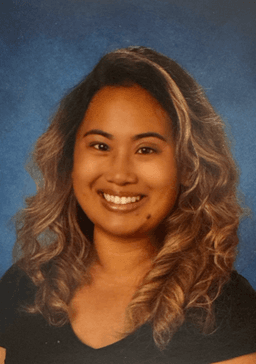
Rhosemarie Abellera is a special education teacher with experience supporting students with significant disabilities. She earned her Bachelor's degree in Human Development and her Education Specialist Credential in Moderate/Severe Disabilities from California State University, Long Beach. She received her Master's degree in Reading and Literacy from California State University, Fullerton. Rhosemarie is passionate about creating accessible learning environments and integrating AAC and assistive technology into daily instruction. She shares practical strategies and adapted classroom ideas for educators on her Instagram platform, @theadaptedclassroom.
Disclosure: Rhosemarie does not have any relevant financial relationship.
Built for you
Who this course is for
Every minute is written for working clinicians, educators, and families. You walk away with real-world tools to try with your next learner, not abstract theory.
Speech-Language Pathologists
Occupational Therapists
AT Specialists
Educators
After this course
What you’ll walk away with.
You leave with concrete skills and frameworks you can apply in your next session, classroom, or family visit, not just ideas to think about later.
Earn your CEUs
Attend the full course and pass the post-session assessment at 80% or higher. Your 0.1 ASHA CEUs are reported to ASHA when you opt in on the assessment.
- 01
You’ll be able to
Identify at least three strategies to embed AAC into circle time routines to support communication for students with complex communication needs.
- 02
You’ll be able to
List how to use low-prep visual supports and modeling techniques that enhance participation and engagement during circle time.
- 03
You’ll be able to
Describe two collaborative strategies SLPs and special education teachers can use to implement AAC consistently and effectively across classroom activities.
The full 1 hour
Your learning path.
- 1
Welcome & Introduction
5 minutes - 2
Define AAC and its role for students with complex communication needs
10 minutes - 3
Embedding AAC into Circle Time
15 minutes - 4
Collaboration Between SLPs and Teachers
15 minutes - 5
Implementation Tips & Tools
10 minutes - 6
Wrap-Up & Q&A
5 minutes
Earn ASHA CEUs in three steps
Free courses, ASHA CEUs when you opt in.
Register & attend
Register in under a minute and watch on-demand, whenever it fits your schedule.
Pass the assessment
Complete the short post-course assessment with 80% or higher to confirm mastery.
CEUs reported to ASHA
Choose to be reported on the assessment and your 0.1 ASHA CEUs are filed to ASHA for you. No paperwork, no chasing certificates.
Ready when you are
Save your seat. It’s free.
Registration is short and free: no credit card, no trial, nothing to cancel later.
Keep going
More in Assistive Technology
Mounting Speech Generating Devices and Tablets to Wheelchairs
This course addresses mounting speech generating devices and tablets to wheelchairs. A variety of commercially available product options will be presented, including off label use of products and custom solutions. Mounting positions the device in relation to the client for visual regard, access, safety, and security.
Considerations in Adding Non-Robust AAC Tools as Secondary Systems
There are a variety of AAC Tools that are very small. They are not, nor claim to be, robust vocabulary systems. These tools can possibly play a secondary role. This session reviews the features and usage of this category of AAC tools; it does NOT promote that these systems are a person's primary system.
The Importance of Multimodal Communication
This is an introductory course to Multimodal Communication. AAC devices are great tools for communication purposes! However, does the patient have to solely rely on the use of an AAC device to functionally communicate? A multimodal form of communication encompasses the use of signs, gestures, vocalizations, words, word approximations, and/or icons. With this method, the patient is able to use any form of communication to convey a message. It is time to embrace any or all forms of communication as opposed to asking the patient to just pick one.