Supporting Collaborative Relationships and AAC Implementation as an SLP Contractor
Discover practical strategies for building strong collaborative relationships as a Speech-Language Pathologist (SLP) contractor. This course explores effective ways to collaborate with other healthcare professionals, work within school and clinic settings, and partner with parents and caregivers.
Speaker
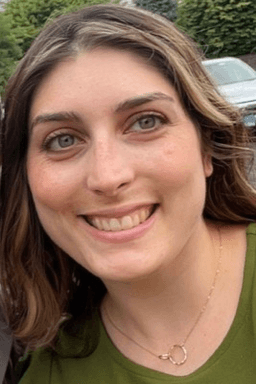
Shea Richard is an ASHA accredited speech and language pathologist. She has a bachelor of science from Southern Connecticut State University and master of science from Emerson College. Shea has worked in multiple school systems in different roles as well as in-home therapy. With extensive experience with Autism Spectrum Disorder (ASD) and Augmentative & Alternative Communication (AAC), she is also passionate about providing evidence-based practices to clients and their families. Shea lives in Connecticut with her husband, daughter, and their energetic dog, Lola.
Disclosure: Shea does not have any relevant financial relationships.
Built for you
Who this course is for
Every minute is written for working clinicians, educators, and families. You walk away with real-world tools to try with your next learner, not abstract theory.
Speech-Language Pathologists
Occupational Therapists
Educators
Care Coordinators
After this course
What you’ll walk away with.
You leave with concrete skills and frameworks you can apply in your next session, classroom, or family visit, not just ideas to think about later.
Earn your CEUs
Attend the full course and pass the post-session assessment at 80% or higher. Your 0.1 ASHA CEUs are reported to ASHA when you opt in on the assessment.
- 01
You’ll be able to
Describe two strategies to help in building necessary relationships with other professionals in a work environment.
- 02
You’ll be able to
List two ways to strategies to strengthen relationships with family members to give your client/student the best quality care.
- 03
You’ll be able to
List one idea to encourage multi-disciplinary communication.
The full 1 hour
Your learning path.
- 1
5 minute intro
- 2
10 minutes building relationships with other professionals
- 3
15 minutes collaborating in schools
- 4
15 minutes collaborating clinic
- 5
15 minutes building relationships & collaborating with parents/caregivers
Earn ASHA CEUs in three steps
Free courses, ASHA CEUs when you opt in.
Register & attend
Register in under a minute and watch on-demand, whenever it fits your schedule.
Pass the assessment
Complete the short post-course assessment with 80% or higher to confirm mastery.
CEUs reported to ASHA
Choose to be reported on the assessment and your 0.1 ASHA CEUs are filed to ASHA for you. No paperwork, no chasing certificates.
Ready when you are
Save your seat. It’s free.
Registration is short and free: no credit card, no trial, nothing to cancel later.
Keep going
More in Collaboration and Interdisciplinary Care
Finding Common Ground
Working collaboratively with many stakeholders, even under the best circumstances, can be stressful, especially with the ongoing challenges of educating learners in the midst of an ever changing pandemic. However, once you understand about your style under stress, you can move forward to address conflicts and disagreements in your teams and educational groups. In this session Beth Poss and Gayl Bowser will team up to discuss important concepts that can help you to find common ground in proactive and positive ways. We'll use a case study approach throughout the session and invite you to bring your stories and questions.
Why Active Listening Makes All the Difference for Speech-Language Pathologists
This presentation explores how honing your ability to listen will directly improve your ability to effectively communicate, and successfully address the needs of clients. This session will teach you how to be an active listener by introducing easy-to-use active listening strategies. Learning these skills will help avoid communication breakdowns, ensure productive conversations, and improve your ability to develop and carry-out the clients' treatment plan. As a result of attending this session, SLPs will learn skills and strategies to support effective listening!
Let's Make Pickles! OT/SLP Collaborative Planning to Provide Integrated Therapy
Collaboration between occupational therapists (OTs) and speech-language pathologists (SLPs) is crucial in providing comprehensive and effective therapy services to students with complex bodies who use switches to communicate and access learning. We will share our literacy-based approach to create month-long lesson plans that target critical communication and activities of daily living (ADL) skills. The lesson plans include fun, engaging activities that build on each other and incorporate sensory activities to help students regulate their bodies and engage in learning. Augmentative and alternative communication (AAC) systems or voice output devices are also recommended to support communication within an activity. Adaptive equipment is used to facilitate the student's participation in activities. Through collaboration, OTs and SLPs can create functional and engaging lesson plans that support and monitor the student's development and success.