Diverse and Ethical Representation in AAC
This session provides an overview of augmentative and alternative communication (AAC) with a primary focus on ethical decision-making, culturally responsive practices, and professional responsibility in AAC assessment and implementation. Participants will examine ethical considerations related to the selection, customization, and adaptation of both low-/light-tech and high-tech AAC supports to ensure equitable, person-centered access for AAC users across settings. This course is registered under ASHA's Ethics subject code.
Speaker
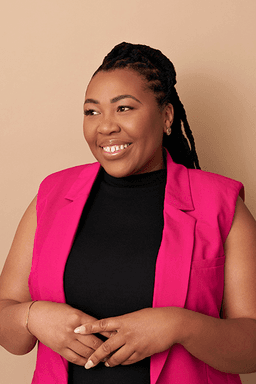
Dr. Christina Royster is the owner/founder of Play on Words Therapy, Inc. She is licensed in Maryland and Washington, DC and has been practicing for over fourteen years. Christina specializes in working with students and clients with various language needs and AAC users. She is a Board Certified Specialist in both AAC and Child Language. Christina currently works in a variety of settings, including private practice, public schools, group homes for adults with developmental disabilities, and she also teaches courses at the graduate level. She is a co-creator in Diverse AAC, which aims to increase awareness and provide information related to diversifying AAC for multicultural AAC users. Christina is also passionate about increasing diversity in the SLP field.
Disclosure: She is a member of the ASHA Special Interest Group 12 (AAC), International Society for AAC (ISAAC), Maryland Speech-Language-Hearing Association, DC Speech-Language-Hearing Association, and the National Black Association for Speech-Language and Hearing. She is the owner/founder of Play on Words Therapy and an employee of Montgomery County Public Schools. Christina Royster received access to various apps and softwares through ASHA licensure and through relationships with app development companies.
Built for you
Who this course is for
Every minute is written for working clinicians, educators, and families. You walk away with real-world tools to try with your next learner, not abstract theory.
Speech-Language Pathologists
Clinical Supervisors
Graduate Students
Ethics Committees
After this course
What you’ll walk away with.
You leave with concrete skills and frameworks you can apply in your next session, classroom, or family visit, not just ideas to think about later.
Earn your CEUs
Attend the full course and pass the post-session assessment at 80% or higher. Your 0.1 ASHA CEUs are reported to ASHA when you opt in on the assessment.
- 01
You’ll be able to
Identify ethical considerations related to representation and equity in augmentative and alternative communication (AAC).
- 02
You’ll be able to
Describe and apply culturally and linguistically responsive considerations when supporting AAC users.
- 03
You’ll be able to
Apply evidence-informed workaround strategies and resources to individualize low-/light-tech, mid-tech, and high-tech AAC systems to support ethical and inclusive clinical practice.
The full 1 hour
Your learning path.
- 1
Welcome & Course Overview
5 min - 2
Ethical Foundations in AAC Practice
5 min - 3
10 min: Ethical Adaptation of AAC Supports
Light-Tech - 4
20 min: Ethical Adaptation of AAC Supports
High-Tech - 5
Case Studies & Ethical Decision-Making
10 min - 6
Resource
5 min - 7
Q&A
5 min
Earn ASHA CEUs in three steps
Free courses, ASHA CEUs when you opt in.
Register & attend
Register in under a minute and watch on-demand, whenever it fits your schedule.
Pass the assessment
Complete the short post-course assessment with 80% or higher to confirm mastery.
CEUs reported to ASHA
Choose to be reported on the assessment and your 0.1 ASHA CEUs are filed to ASHA for you. No paperwork, no chasing certificates.
Ready when you are
Save your seat. It’s free.
Registration is short and free: no credit card, no trial, nothing to cancel later.
Keep going